Philanthropy that transforms
We fund marginalized groups because we believe that is the way to strengthen access to rights. We see democracy as access to rights, not just voting.
We fund marginalized groups because we believe that is the way to strengthen access to rights. We see democracy as access to rights, not just voting.
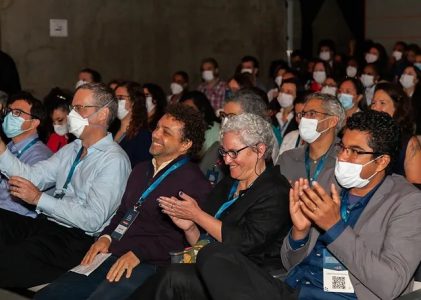
Have you heard of imaginal cells? This is what Amaha Selassie asked us as we sat in the jungle-themed hotel lobby. It was the night after the #ShiftThePower Summit in Bogotá, and 5 of us had come together seemingly by accident, talking for hours about the worlds of possibility and complexity that the Summit had unlocked. None of us knew about these cells, so Amaha explained
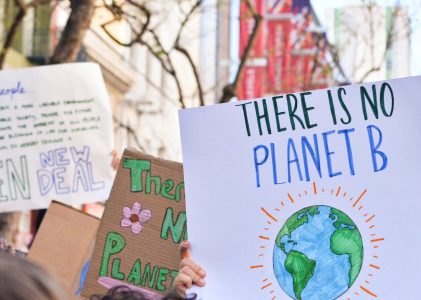
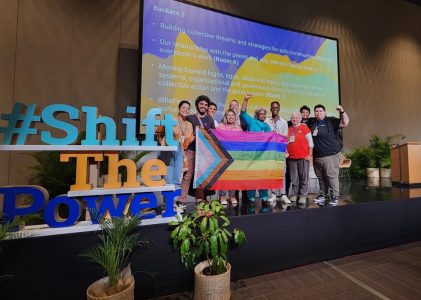
As global leaders met at the COP in Dubai, over 700 change-makers who work in communities in over 80 countries met in Bogotá with a focus on harnessing and mobilizing resources so that all may thrive, even in the midst of the climate crisis.
Quando o primeiro-ministro Abiy Ahmed assumiu o poder na Etiópia em 2018, as esperanças no país pareciam ter se renovado. Ahmed iniciou um período de transição, prometendo reformar o estado autoritário, realizar eleições e implementar políticas de liberalização. No entanto, muitas leis restritivas permanecem em vigor e o país ainda enfrenta uma guerra civil e a violência entre diferentes comunidades ou grupos étnicos, além de abusos por parte das forças de segurança.
En 2018, lorsque le Premier ministre Abiy Ahmed est arrivé au pouvoir, l’espoir semblait renaître pour le pays lorsqu’il a entamé une période de transition en Éthiopie, promettant de réformer l’État autoritaire du pays, d’organiser des élections et de mettre en œuvre certaines politiques de libéralisation. Son prédécesseur, le Premier ministre Hailemariam Desalegn, avait démissionné face à des manifestations de masse. Cependant, l’Éthiopie reste aujourd’hui en proie à la guerre civile et à la violence intercommunautaire, les abus des forces de sécurité et les violations des droits de la défense sont encore fréquents, et de nombreuses lois restrictives restent en vigueur.
In 2018 when Prime Minister Abiy Ahmed came into power, there seemed to be renewed hope for the country when he set off a transitional period in Ethiopia, promising to reform the country’s authoritarian state, holding elections, and implementing some liberalization policies. His predecessor, Prime Minister Hailemariam Desalegn, had resigned in the face of mass protests. However, today Ethiopia remains beset by civil war and intercommunal violence, abuses by security forces and violations of due process are still common, and many restrictive laws remain in force.
A diverse, multifaceted movement aiming to promote greater visibility of the agendas and practices of community and social justice philanthropy in Brazil.
First responders and the contributions made by other Malawians had been “erased” from the narratives on humanitarian response to cyclone Freddy.
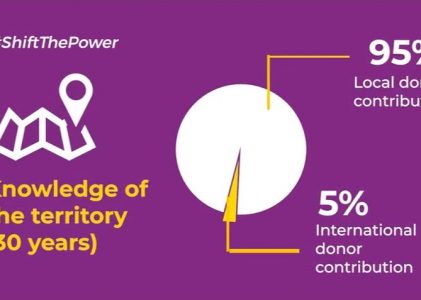
External resources are only a modest contribution to the gigantic efforts and contribution that the communities make daily. They are the “starting point.” Without it, there is no possible development project.
In 2020, a 90-year-old woman, Madam Denteh, was publicly lynched to death in the Savannah region in Ghana after being accused of witchcraft. The video of the lynching went viral and attracted police and national security investigations, resulting in the arrest of some of the perpetrators. Like in many parts of the world, a belief in sorcery and witchcraft still exists in Ghana, and accusations of witchcraft are followed by social stigma and discrimination. While both men and women have been accused of witchcraft, the accused are disproportionately women. In some cases, they have been murdered and mobbed following allegations of witchcraft against them.