
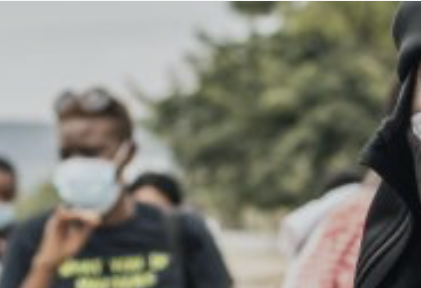

Not all change starts with formal organisation. Sometimes it starts with a new generation taking the digital reins. In October 2020, Nigeria’s youth began an uprising. What started with hashtags and smartphone videos soon grew into one of the most resourceful instances of collective action the nation had ever seen. Yet this movement did not follow the traditional frameworks of institutional transformation. Instead, the story is one of decentralised coordination, with civil society and citizens joining forces against repression.
Understanding EndSARS
The EndSARS movement was a call for the disbandment of the ‘Special Anti-Robbery Squad’(SARS), a notorious unit of the Nigerian Police long known for its record of human rights abuse against citizens. Protests were held over 35 cities across 23 states in Nigeria and the diaspora, and the government responded with indiscriminate arrests and detentions.
Notably, for those who helped coordinate and fundraise for the movement, the government also froze individual and organisational bank accounts. For many this became a badge of honour, but for the government the aim was clear: starve the movement of funds and wait for the steam to run out.
Worldwide, this is a tactic many authorities are beginning to use more, but in the case of EndSARS, the state underestimated a generation who understood technology and trusted differently. Within days, activists found new lifelines, such as VPNs and digital currencies, and young Nigerians learnt something that most NGOs across Africa have yet to fully harness—that decentralised and community-trusted fundraising can outlast formal authority.
Surviving starvation
One of the most striking dimensions of the EndSARS movement was its embracing of cryptocurrency. Bitcoin became a tool of resistance for fundraising groups such as The Feminist Coalition, and this enabled discreet cross-border transfers while maintaining transparency through blockchain records. The coalition coordinated much of the fundraising for the EndSARS protests in this way, and provided regular updates on the amounts raised, including an audited account after the protests died down.
Not all change starts with formal organisation. Sometimes it starts with a new generation taking the digital reins.
This was innovation through necessity, and while many nonprofits on the African continent continue to depend on traditional gateways such as foundation grants and donor calls, EndSARS was a form of civil defence largely coordinated and sustained over social media and digital payment platforms. Crypto helped overcome state interference and challenged the notion that only institutional actors could manage accountability at scale.
Yet, money is not the only support that flowed. The protests mirrored the African concept of collaborative contribution, where not everyone brings cash, but everyone brings something to the cause.
Lawyers volunteered to defend the arrested; doctors set up makeshift clinics at protest grounds; cybersecurity experts issued safety advisories to shield organisers from surveillance; and food vendors and private citizens brought water, masks, and phone-charging devices, or helped clean the streets after protests.
Similarly, online traction became a new currency of endorsement. Each retweet, post from a public figure, or drone photograph of the Lekki Toll Gate multiplied awareness. And as attention translated to credibility, so credibility translated to resources.
Movements that understand the economics of attention stay ahead of those waiting for donors’ ‘Request for Proposals’ to open.
It’s a reminder that in today’s digital age, money is merely a means to pay for things, while collective engagement deepens trust and attracts both energy and financial support. Movements that understand the economics of attention stay ahead of those waiting for donors’ ‘Request for Proposals’ to open, and in Africa’s civic space, this pathway remains largely underexplored.
Beyond institutional involvement
In terms of fundraising for EndSARS, it is also worth noting that the Nigerian diaspora played a critical role. Young Nigerians in London, Toronto, and Houston organised funding drives and digital solidarity rallies, while crowdfunding platforms became engines of political mobilisation. The movement showed that solidarity no longer depended on institutional involvement, and that passion, connectivity, and digital organising could be a framework for realising nation-scale goals.
The spontaneity of social financing also stood in sharp contrast to the dominant conventions of donor culture, which demanded structure, measurable outcomes, and institutional identity.

Often funders expect movements to transition into organisations before aid can flow, yet cases such as EndSARS show that power sometimes lies in remaining fluid and informal. In contrast, the now lean posture of the Transition Monitoring Group (TMG), which once commanded authority in Nigeria’s early democratic years, illustrates how the professionalisation of an organisation can also thin it under the weight of donor cycles and reporting requirements.
Beyond bureaucracy
Institutionalisation can be good. It can bring stability and structure, but it can also dilute the vibrancy, efficacy and, quite frankly, the rage that so often fuels social change. As such, EndSARS poses a critical challenge to donors, asking how they can support citizens without suffocating them, and how philanthropy can keep pace with the speed of social movements.
There are now clear cracks appearing on the walls and ceilings of institutional philanthropy. In this new era, institutional financing must be blended with models that prioritise truly impactful actions and, with timeliness of response being what determines a movement’s survival, we need to reduce funding friction and allow resources to move directly from givers to doers.
Four lessons from our region could help in this transition:
- The future of fundraising will hinge on agility. Institutional donors should look to adopt microgranting, flexible civic solidarity funds, or emergency regranting pools that activists can access in real time.
- Digital tools must become routine, not optional. Blockchain and cryptocurrency offer transparency mechanisms suitable for small civic actors. Even simple tools such as mobile money, WhatsApp groups, and QR-code payments can revolutionise giving.
- Partnerships matter. The EndSARS model thrived because trust was shared horizontally, not vertically. Activists, lawyers, medics, artists, and content creators operated as an ecosystem rather than a hierarchy. Donors who learn to fund ecosystems rather than isolated entities will find that accountability improves as ownership becomes collective.
- Storytelling is a currency. Strategically managed online traction can open direct pathways to funding through transparent storytelling and social proof. Above all, movements remind us that funding is political.
As Nigeria and other African countries grapple with shrinking civic space, the fundraising lessons from the barricades remain. They remind us that innovation often emerges from lived experience, not laboratories, and sometimes it takes shape in the hashtags, chants, and care networks of young people who choose to act where institutions hesitate.
The future of social financing depends on how willing institutional philanthropy is to learn from such unscripted courage. After all, if EndSARS could crowdsource justice, logistics, and accountability at scale without a single signed grant, perhaps it is time to admit that the next phase of philanthropic innovation may not happen through grantee agreements, reports, or bureaucracy; it will happen through a liberated rage for change.
Rotimi Olawale is the Executive Director of Youthhubafrica, and ‘Sola Fagorusi is the Executive Director of Onelife Initiative. This article was first published by Alliance Magazine.